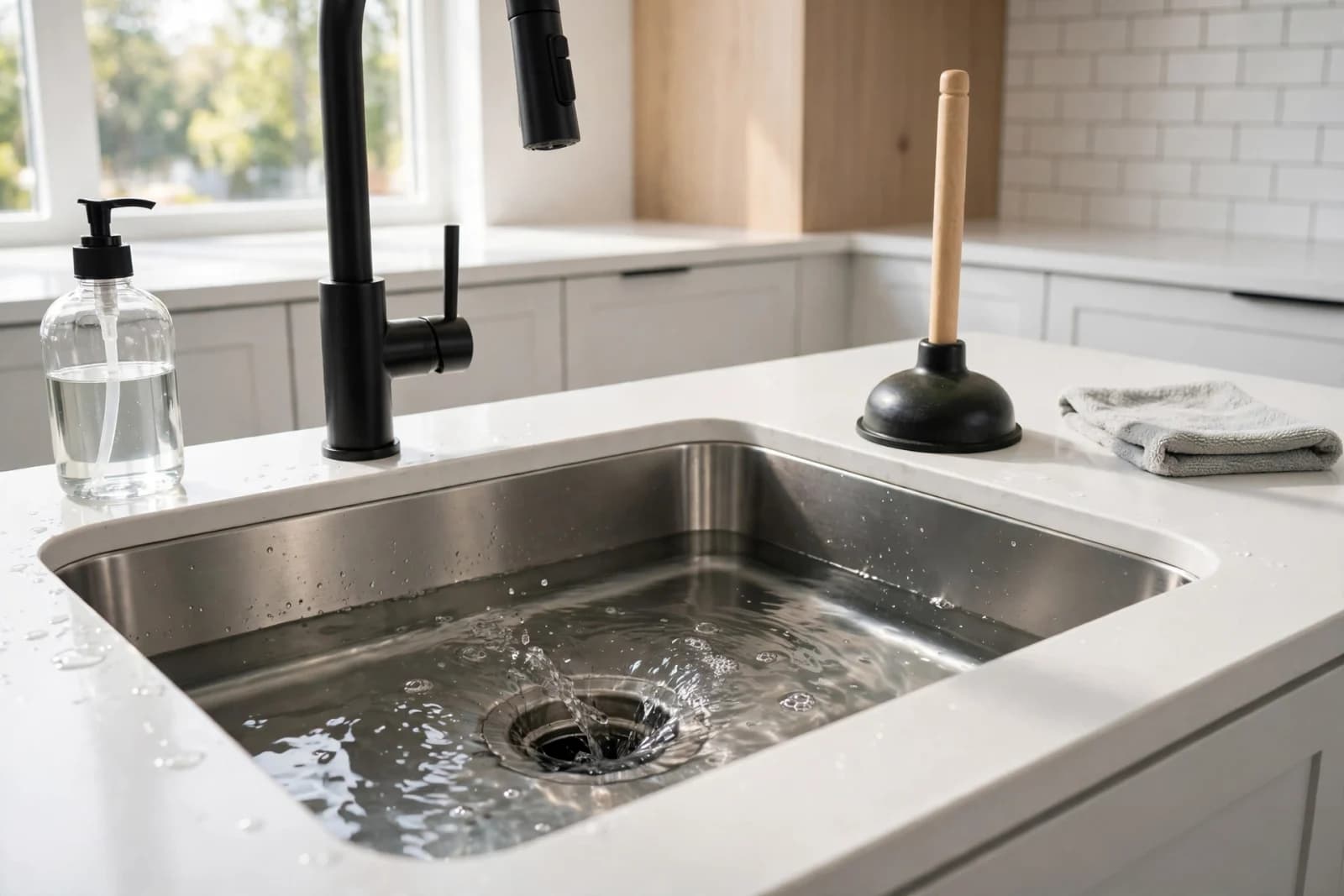
Water is pooling in the sink, draining slowly, and every time you run the tap it rises a little higher. Before you pour in a bottle of drain cleaner or pay for a plumber, try the methods that actually work for most home blockages.
Most slow drains are caused by hair, soap scum, grease, or food buildup within the first few feet of pipe, and you can clear them with two cheap tools in under 30 minutes.
The 2-minute test
Run the tap for 30 seconds and watch. If water drains slowly but does not back up into another sink or tub, the blockage is local, in that drain or trap, and you can fix it yourself. If water backs up in a second drain, or the toilet gurgles when the sink drains, stop, that can be a main line problem and needs a professional. If only one drain is slow, start with the plunger.
Step 1 Plunger first
Use a cup plunger for sinks and tubs, not a flange plunger, which is for toilets. Block the overflow hole with a wet cloth so pressure goes down the drain, not out the overflow. Add enough water to cover the plunger cup, then push down and pull up firmly 15 to 20 times, keeping the cup sealed.
Real example: a bathroom sink that took 3 minutes to drain cleared in 2 minutes of plunging once the hair and soap plug near the drain moved.
Step 2 Drain snake
A 15 to 25 foot hand drain snake costs less than one plumber visit. Feed it slowly into the drain, turn the handle clockwise, and pull back gently when you feel resistance, that is the blockage catching. Pull out the hair and buildup, wipe the snake, and repeat. Run hot water for 2 minutes after, and test the drain.
Step 3 Check the trap, only if you are comfortable
Place a bucket under the U-shaped trap under the sink, unscrew the slip nuts by hand or with pliers, and let the water and debris fall into the bucket. Clean the trap, then reassemble hand-tight plus a quarter turn. Run the tap and check for leaks for 2 minutes. If the trap is cracked or will not seal, stop and replace it or call a professional.
What NOT to do
Do not pour chemical drain cleaner first, it can burn skin and eyes, damage old pipes, and if it does not work, a plumber then has to work in a pipe full of caustic liquid. Do not use a garden hose at full pressure in an indoor drain. Do not keep forcing a snake that is stuck, pull back, and if it will not move, stop.
Quick recap
- One slow drain, no backup elsewhere: plunger, 15 to 20 times, sealed cup.
- Still slow after plunging: drain snake, 15 to 25 feet, slow and steady.
- Trap full of debris: clean the trap, reassemble, check leaks for 2 minutes.
- Backup in multiple drains or toilet gurgles: stop, call a professional, main line problem.
FAQ
Is chemical drain cleaner safe for pipes?
It can damage old, plastic, and corroded pipes, and it rarely clears a solid hair plug, so try mechanical methods first.
How often should I clean a drain?
If a sink drains slowly every few months, clean the trap and strainer every 3 to 6 months, and use a strainer to catch hair.
When should I call a plumber?
If multiple drains back up, water comes up in another fixture, the trap is damaged, or the snake will not clear the blockage, call a professional.
Can boiling water clear a drain?
Hot water helps grease in kitchen drains, but boiling water can crack porcelain and damage PVC joints, so use hot tap water, not boiling, on bathroom drains.
Related guides
Next, read the home practical guides in this series for fixes you can do with basic tools, and the mobile fixes series if your phone is also giving you trouble.